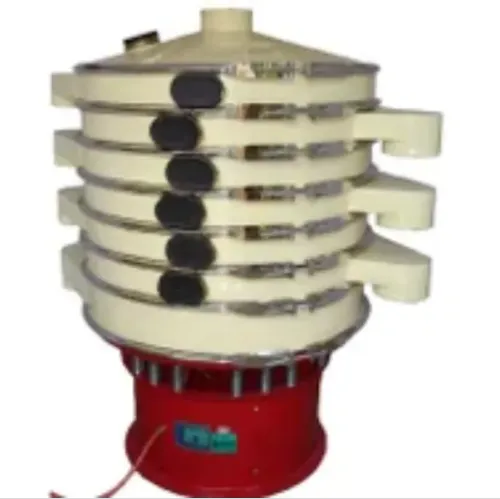
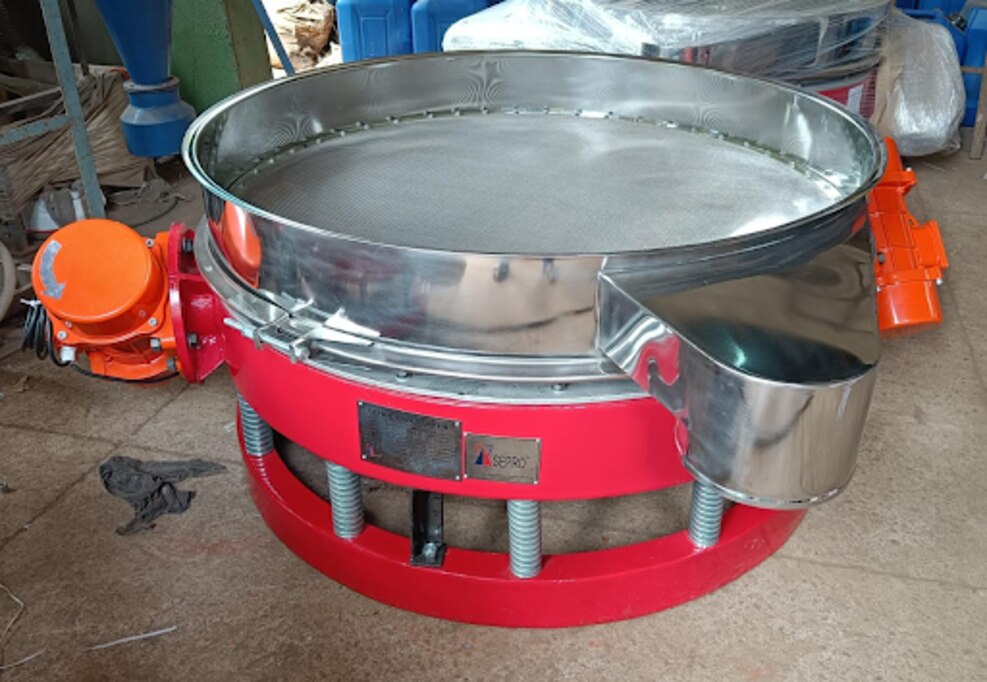
Lumps in detergent powder can block auger fillers, distort sachet weights, increase dust and leave an uneven product appearance. You will learn how vibration separates soft agglomerates, where screening stops being effective, how to select an aperture, and how to prove that the powder remains uniform after packing and transport.
Key takeaways
- Screening removes oversize lumps; it does not grind them or equalise chemistry.
- Select an aperture smaller than unwanted lumps but larger than useful granules.
- Control feed rate, moisture, vibration, and screen loading to protect separation.
- Compare before-and-after sieve results to prove uniformity improved.
What vibration screening removes—and what it leaves behind
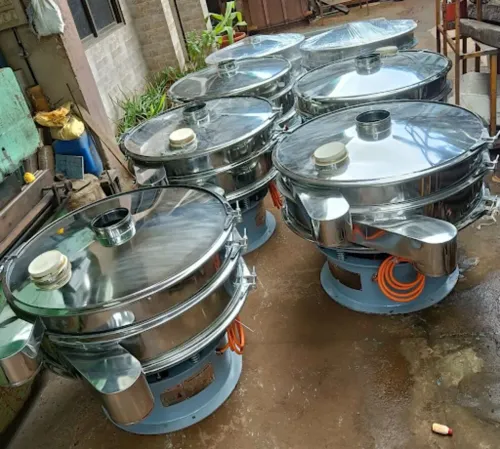
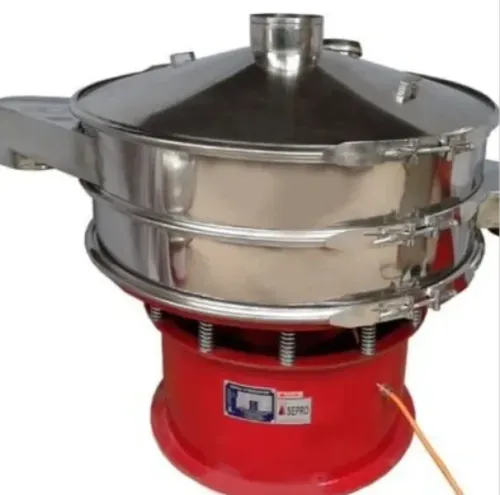
A detergent powder screening machine removes particles above the selected aperture; it does not grind every lump or make the undersize fraction chemically uniform. On a vibratory screen, vibration spreads the powder across the mesh and moves it toward the outlet.
Particles smaller than the openings fall through, while larger pieces travel to the oversize discharge.
- Soft agglomerates can crumble from gentle handling or contact with the mesh, allowing their smaller particles to pass.
- Hard, moisture-fused or binder-rich agglomerates usually remain oversize and need isolation for a lump breaker, mill, controlled recycle loop or disposal.
- If a specification says “hard detergent lumps como?”, clarify whether it means these intact fused agglomerates before selecting equipment or a rework route.
This distinction matters downstream. Removing oversize can reduce auger bridging, sachet weight variation, bag-filling interruptions and visible lumps, while supporting more consistent dissolution and consumer appearance. It does not automatically change the complete particle-size distribution, and excessive vibration can create dust or damage useful granules.
Keep the oversize discharge separate. Returning it directly to the feed can send hard pieces back into packing, while grinding it can create excess fines that segregate, increase dust and alter filling behaviour. A screen separates; a separate process must break or reform material that the screen cannot pass.
How to choose the aperture without losing useful granules
Choose the screen aperture from a measured particle-size distribution and process requirement, not from mesh size alone. Define an upper-size limit, such as maximum permitted oversize, and an acceptable fines fraction; “passes 1 mm” controls only the top cut, not the particles below 1 mm.
Take a representative feed sample for sieve analysis, then run aperture trials and record:
- Retained oversize percentage
- Fines percentage
- Feed rate and screen setting
- Bulk-density or composition changes
Mesh-number conversions depend on wire diameter. Use test sieves with ISO 3310-1 sieve analysis checks or ASTM E11 construction and aperture tolerances so repeated tests measure the same cut.
| Aperture trial | Likely result | Decision |
|---|---|---|
| 1.0 mm | Removes large lumps but may retain useful granules | Accept only if oversize meets the limit |
| 0.8 mm | Captures more agglomerates and functional granules | Check fines, density and composition |
| 0.6 mm | Produces a finer cut with higher separation risk | Use only if the process requires it |
Detergent powder can contain carbonate or sulfate builders, zeolite, enzymes, fragrance, bleaching agents and post-dosed granules with different densities and friability. A tighter aperture may improve visual lump removal while stripping useful spray-dried granules or separating ingredients. Use gentle handling, then final blending or post-dosing when the trial changes composition.
How feed conditions and screen settings control separation
Feed rate determines whether the selected aperture works: a deep bed reduces particle-to-mesh contact, so a smaller screen fed evenly can outperform a larger machine receiving one concentrated stream. Spread material across the effective screening area, protect open area, and maintain correct mesh tension; a slack mesh traps powder and changes the aperture.
| Condition or setting | Separation effect | Corrective action |
|---|---|---|
| Feed rate and presentation | A deep bed and concentrated stream reduce contact | Lower feed rate and distribute the stream |
| Vibration amplitude and screen inclination | Excess movement shortens residence time, throws powder over the screen, raises dust and can damage fragile granules | Increase only enough to move material across the mesh |
| Moisture, temperature and humidity | Moisture pickup, condensation, high powder temperature and high relative humidity promote lumps and screen blinding | Dry or cool upstream and control humidity |
| Screen cleaner | Soft deposits, electrostatic adhesion and hard fused material need different treatment | Use ball decks, slider cleaners, ultrasonic deblinding or scheduled cleaning |
Set screen inclination to provide enough residence time for undersize particles to find the mesh; too steep a deck sends powder to discharge before it passes. Route undersize away from the oversize path, because re-entry defeats separation.
Hygroscopic or surfactant-rich ingredients worsen blinding during long residence time, so upstream drying and humidity control often outperform higher vibrator power.
A safe operating workflow from feed inspection to packed product
A reliable detergent powder screening workflow starts with the batch record, not the vibrator. Follow this sequence:
1. Verify the batch number, formulation and visible condition. Reject unidentified material and flag wet patches, foreign matter, discolouration or hard fused lumps.
2. Measure powder temperature and moisture against the process specification. Dry or condition the feed only when the formulation and quality procedure permit it; uncontrolled heating can damage enzymes, fragrance or bleaching agents.
3. Check mesh integrity, aperture, tension and cleanliness. A torn, loose, blinded or incorrectly sized screen can pass oversize material or remove useful granules.
4. Fit the enclosure, local exhaust and suitable dust collection before feeding. Ground conductive machine parts, containers and transfer components. Combustible-dust risk depends on particle size, moisture, additives and formulation—not the word “detergent” alone.
5. Load the screen at a controlled, even rate. A concentrated feed stream or overloaded deck forms a deep bed and reduces contact with the aperture.
6. Collect the undersize fraction in a closed container, then isolate oversize material. Do not return it automatically.
7. Release oversize for rework, milling, controlled recycling or disposal only after checking identity, contamination and formulation compatibility. Record the decision.
When requesting quotations, specify feed presentation, open area, effective screening area, cleaner type, enclosure, discharge separation and dust-control provisions—not motor horsepower alone. Separation Engineers (India) can be compared with other suppliers against that specification.
Related product
 | Detergent Powder Screening machine Detergent Powder Screening machine The Bulk Drug Screening Machine from Separation Engineers India is a high-performance vibrating screen designed specifically for the pharmaceutical... View product → |
How to prove that screening improved uniformity
A valid result starts with representative sampling, not a clean-looking screen. Take increments from the moving product stream throughout discharge and from multiple containers after conveying and packing; do not rely on a scoop from the hopper top. Fines migrate through voids between coarser particles, so segregation can appear after screening.
Compare pre-screen and post-screen results using the same sieve method. A single “passes 1 mm” statement controls the top cut but says nothing about the fines fraction or composition. Use powder uniformity measurement that includes:
| Measure | Pre-screen versus post-screen comparison | Acceptance evidence |
|---|---|---|
| Sieve-analysis curve | Full particle-size distribution | Upper-size and fines limits are met |
| Retained oversize percentage | Oversize before and after screening | Oversize is reduced and routed for approved rework or discard |
| Fines percentage | Fine fraction at each sampling point | No unacceptable fines increase during screening or handling |
| Bulk density variation | Density across stream, discharge and containers | Variation remains within the product specification |
| Sample-to-sample consistency | Composition or assay between increments | No meaningful segregation after packing |
Record feed rate, aperture, vibration setting, moisture, feed temperature, screen efficiency and cleaning events. These records reveal gradual blinding or aperture wear that appearance misses. Add a handling or attrition check when weak agglomerates could break during pneumatic conveying or packaging.
Inspect auger filling, sachet and bag-fill behaviour, dust release, dissolution and visual appearance as supporting process checks only. Visual inspection cannot prove uniformity. The final acceptance record must show that the post-handling undersize still meets both size limits and that oversize followed the approved route.
Frequently asked questions
What does a detergent powder screening machine remove?
It removes particles larger than the selected screen aperture, including oversize lumps. It does not grind lumps or make the undersize powder chemically uniform.
How do you choose a screen aperture for detergent powder?
Choose an aperture that retains unwanted lumps while allowing useful granules to pass. Check the retained material and product loss during a trial.
Which operating conditions affect detergent powder screening?
Feed rate, moisture, vibration settings, screen loading, and powder distribution across the mesh control separation performance.
How can you prove that screening improved powder uniformity?
Take representative samples before and after screening, run the same sieve analysis, and compare the retained fractions and particle-size results.