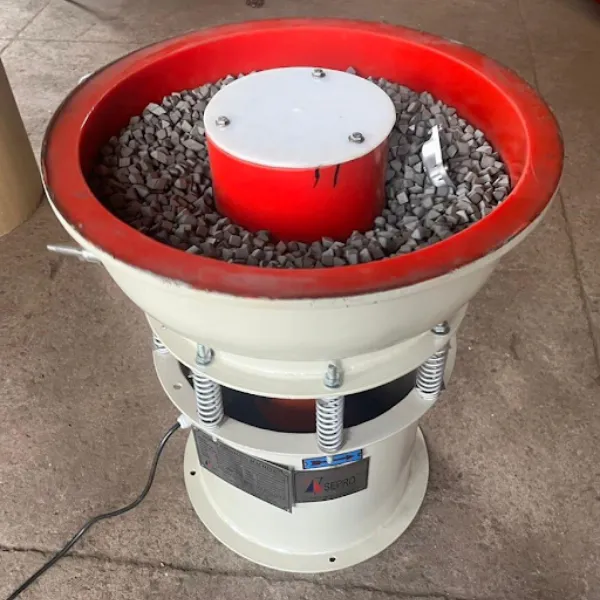
A component can meet its dimensional requirements and still need additional finishing before it is ready for assembly, coating, plating, packing, or dispatch. Burrs, rough edges, machining residues, and uneven surface conditions can create problems later in production. Selecting the right Metal Surface Finishing Machine therefore requires a clear understanding of what the finishing stage needs to accomplish.
Equipment should be chosen around the component rather than around a generic promise of improved finish.
Define the Production Problem
Start by identifying why finishing is required.
Typical requirements can include deburring, edge conditioning, smoothing, cleaning, surface preparation, or aesthetic improvement. Some components may need a combination of these outcomes.
A written finish specification can prevent confusion during machine evaluation.
Prepare Representative Components
Equipment trials should use parts that reflect normal production.
Selecting only unusually easy components may produce misleading results. Include representative burr levels, material conditions, sizes, and geometries.
Where a factory manufactures several component families, samples from each relevant family can help determine how flexible the proposed equipment needs to be.
Review Component Geometry Carefully
Holes, slots, narrow recesses, threads, thin walls, and delicate features influence finishing behaviour.
Media selection needs to account for these details. The wrong media shape or size can become trapped, fail to reach required surfaces, or interact with sensitive areas.
Manufacturers should also identify surfaces that must not be altered.
Evaluate Capacity Using Real Batch Loads
Nominal machine capacity should not be confused with practical production capacity.
The quantity of components that can be processed effectively depends on component volume, media requirements, acceptable part-to-part contact, and the target finish.
A realistic trial batch provides a better indication of daily output.
For manufacturers in Navi Mumbai and Maharashtra, this is especially important when finishing equipment must support established machining, stamping, casting, or fabrication schedules.
Examine the Complete Workflow
A machine needs suitable space for loading, unloading, media handling, inspection, and routine maintenance.
Ask practical questions before purchase:
- How will parts reach the machine?
- How will completed parts be separated from media?
- Is rinsing required?
- Where will media and compounds be stored?
- Can operators access service points?
- How will finished parts move to the next stage?
These details can determine whether a theoretically suitable machine works efficiently on the shop floor.
Compare Results Against Defined Criteria
After a trial, evaluate the component systematically.
Check burr reduction, surface condition, edge quality, dimensional requirements, media entrapment, cycle time, and consistency across the batch.
Where possible, compare several processing conditions rather than making a decision based on a single trial.
Choose a Supplier That Understands the Application
Finishing equipment selection benefits from application-level discussion. A supplier should ask about component material, geometry, production quantity, current process, desired output, and downstream requirements.
Separation Engineers works with industrial finishing applications and equipment selection based on production needs. Manufacturers assessing a Metal Surface Finishing Machine for operations in Navi Mumbai or elsewhere in Maharashtra can prepare component samples and a clear finish specification before supplier discussions. This makes it easier to compare solutions on actual production performance instead of relying mainly on equipment dimensions and general specifications.
Keywords