A gelatin batch can leave the dryer within specification and still develop oversize particles, fines, or agglomerates before packing. You will be able to define the size band, set the screening process, control changing feed conditions, and verify that the collected fraction matches the specification.
Key takeaways
- Choose screen apertures that match the required gelatin size band.
- Condition gelatin to prevent moisture, clumping, and blinding during screening.
- Balance feed rate, vibration, and residence time for stable separation.
- Verify each fraction with sieve analysis and documented sampling.
How the Screen Separates Gelatin Into a Controlled Size Band
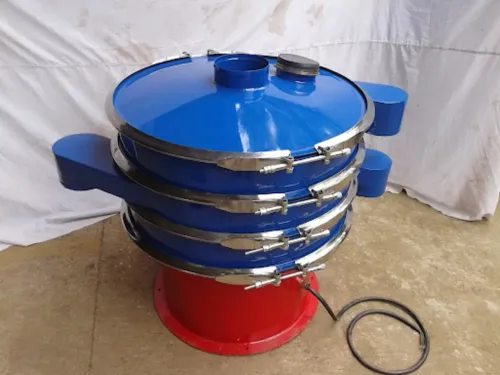
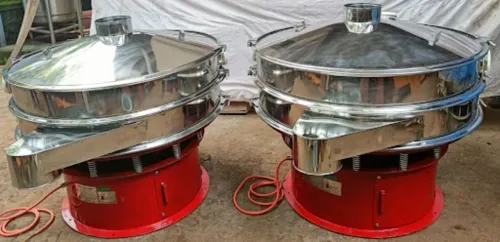
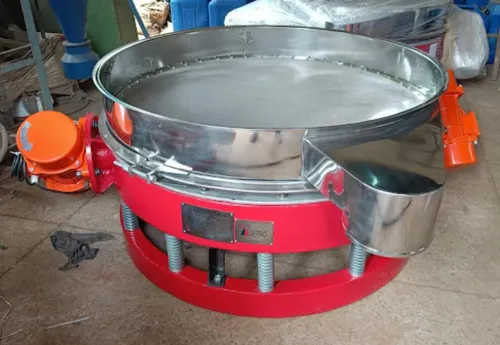
A gelatin screening machine maintains particle-size consistency by passing the product across a screen with a defined aperture. Gelatin particles smaller than the opening pass through as undersize material, while oversize particles remain on the screen and discharge separately.
Screening classifies; it does not grind, so retained oversize particles need a separate milling, rework, or disposal route.
Define the acceptable band before choosing the screen:
- Mesh opening or aperture size that sets the cut point
- Aperture shape suited to the particle form and flow
- Maximum permitted oversize percentage
- Maximum permitted fines percentage
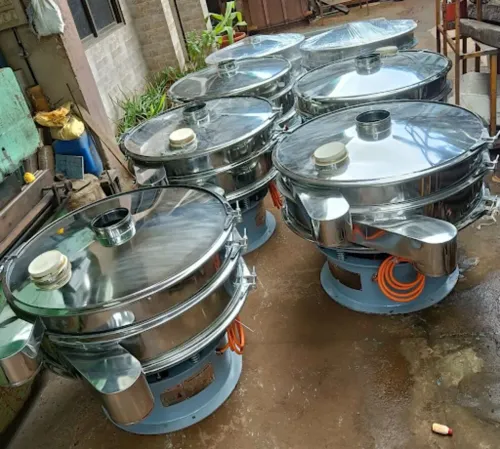
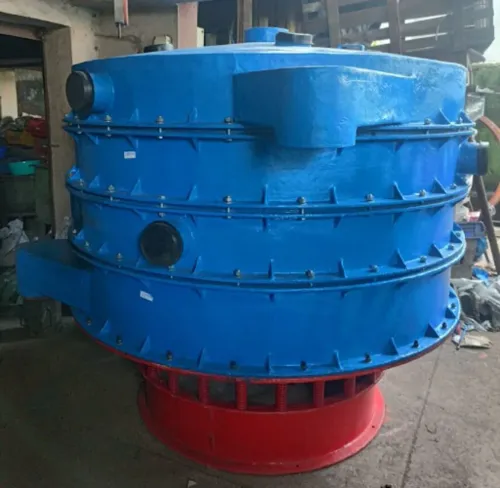
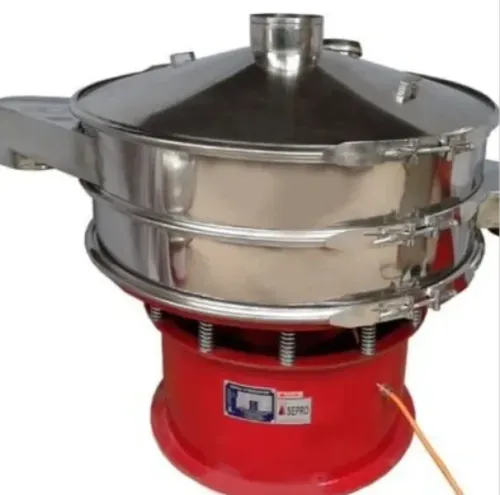
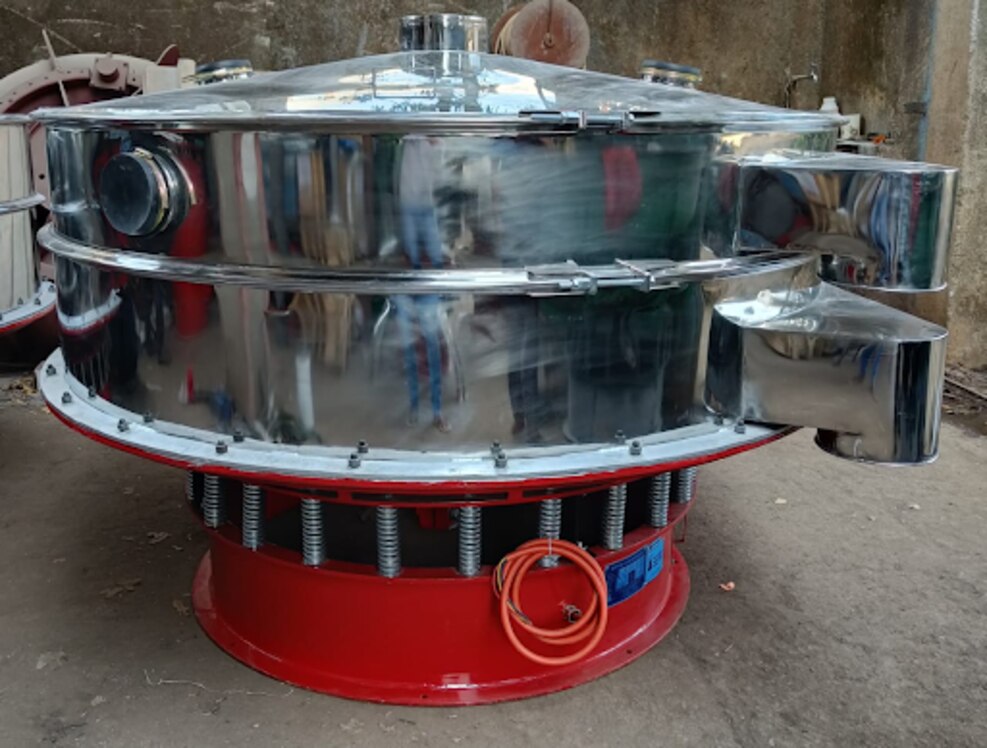
During production, the accepted fraction is collected from the correct discharge while rejected material stays segregated. A multi-deck arrangement can produce several size fractions in one pass, with larger openings placed before smaller openings in the direction of flow. Each discharge needs physical separation to prevent a good fraction from being contaminated by rejects.
Feed depth controls whether the cut point remains reliable. Feed the deck too heavily and near-size gelatin cannot reach the apertures; oversize carryover rises even when vibration is unchanged. Caked material can also lodge in the mesh, reducing open area and progressively retaining more product.
Use a documented operating window linking feed rate, aperture, vibration setting, and cleaning interval to sieve-test results. A constant vibration setting alone cannot guarantee the required gelatin particle size when the incoming material changes.
How Gelatin Condition Determines Whether Screening Works
A gelatin batch can fail the screen before the machine settings change. Hygroscopic gelatin absorbs moisture during storage and transfer, then becomes cohesive, sticky, or caked; the screen may retain these gelatin agglomerates as oversize even when their individual particles meet specification.
1. Measure gelatin moisture content at the screen inlet and compare it with the validated production range. Record the result by batch. Moisture outside that range can increase cohesion, promote screen blinding, and alter the proportion of material passing the aperture.
2. Check product temperature after drying, milling, or storage. Let gelatin reach the approved conditioning temperature before screening, and prevent warm material from meeting a cooler screen where condensation can form. Temperature changes also affect flow and lump strength.
3. Inspect for gelatin agglomerates rather than assuming the screen will break them. Pass compacted lumps through a suitable deagglomerator or mill when the process permits; otherwise, the screen will classify intact lumps as oversize and send good gelatin to rework.
4. Observe bulk behaviour during a controlled feed test. Check whether the powder flows continuously, carries static, compacts in the hopper, or forms mesh bridging across the aperture. A pulsing or concentrated flow overloads one area, causing local blinding while other screen area remains unused.
5. Confirm the screen is clean, intact, and evenly tensioned before feeding. A loose or damaged mesh changes the effective opening and can release wire fragments into the product. Record the condition alongside moisture, temperature, and sieve-test results.
How to Set Feed Rate, Vibration, and Residence Time
Keep gelatin feed rate low enough for a shallow, even bed across the deck. A deep bed hides near-size particles from the aperture, causing oversize carryover even when the screen vibration parameters remain unchanged.
| Operating condition | Effect on separation | Corrective action |
|---|---|---|
| Low feed rate | More residence time and better exposure to the mesh, but excessive empty deck space reduces capacity | Increase gradually while checking sieve results |
| Target feed rate | Near-size particles contact the aperture consistently and accepted material reaches the collection stream | Record this rate as the production setpoint |
| High feed rate | A deep bed increases carryover, blinding, and distribution width | Reduce rate or add screening area |
Set screen inclination to give particles enough travel time without allowing them to stall. A steeper deck raises throughput but shortens residence time; a flatter deck extends residence time but can increase buildup and blinding.
Adjust amplitude and frequency together, then confirm the result with sieve tests. More aggressive motion is not a universal fix: it can propel gelatin across the deck before near-size particles pass, create dust, and increase screen and bearing wear. Distribute the feed across the full screen width; a concentrated stream overloads one zone.
Document the operating window for gelatin feed rate, screen vibration parameters, screen inclination, aperture, deck arrangement, moisture condition, and cleaning interval. If moisture or bulk behaviour changes, repeat the sieve test rather than holding vibration constant and assuming the particle-size distribution will remain stable.
How to Control Multiple Fractions and Confirm the Result
Use a single-deck screen for one size cut; choose a multi-deck screen when you need several fractions in one pass. Arrange apertures from largest to smallest in the direction of flow, and give every discharge its own sealed chute or container.
- Assign each deck to a named fraction before production. Record its aperture, product destination, permitted oversize and fines, and the feed rate and vibration setting used to achieve it.
- Prevent carryover at every transfer point. Inspect screen edges, gaskets, chutes, and collection bins for damage or retained gelatin, then clean them at the documented interval. A hidden crevice can contaminate the next batch and make an unchanged process appear inconsistent.
- Keep one operating window for each grade. Link deck arrangement, aperture, moisture condition, feed rate, vibration, and cleaning interval to the resulting sieve-test data; a fixed vibration setting alone cannot control particle size when gelatin properties change.
- Route oversize to milling, rework, or disposal. Screening retains large particles but does not reduce them, and a moisture-related agglomerate can be oversize even when its individual particles meet the specification.
- Take a representative sample from the product stream or batch, not from the cleanest-looking discharge. Perform a defined sieve analysis using test sieves conforming to ISO 3310, a recorded sieve stack, sample mass, sieving time, and reporting convention. Compare the retained and passing percentages with the approved specification before releasing the fraction.
Which Screening Method Fits the Gelatin Grade and Production Volume
Choose the method against your gelatin grade, required particle-size band, and production volume—not vibration alone. A documented operating window must link feed rate, aperture, deck arrangement, moisture condition, vibration setting, and cleaning interval to sieve-test results.
| Option | Strength | Limitation | Best fit |
|---|---|---|---|
| Vibrating screen | Separates multiple fractions at defined apertures with controlled residence time | Does not reduce oversize; extraction drafts can disturb fines | Continuous food, pharmaceutical, or chemical lines |
| Rotary sifter | Provides enclosed, gentle screening for moderate-throughput powders | Long screen paths can retain material and complicate cleaning | Smaller batches and products needing low-impact handling |
| Centrifugal sifter | Uses rotating paddles to push powder through mesh and handle compact layouts | Shear, heat, or static can affect gelatin behaviour | Fine powders with controlled feed and suitable cleaning access |
| Manual sieve test | Confirms particle distribution using a known sample and sieve stack | Not a production-sizing method | Bench comparison, batch release, and troubleshooting |
Select the vibrating option when you need continuous grading and several fractions, but specify where oversize goes: milling, rework, or disposal. Do not treat its discharge as proof of compliance; take representative samples and use a defined mass, sieve stack, sieving time, and reporting method. ISO 3310 covers test sieves.
Ask Separation Engineers (India) to match the screen design to your gelatin processing equipment, then verify cleanability, gasket condition, screen tension, and dust-extraction balance. A loose mesh, retained gelatin, or changing airflow can make identical settings produce different sieve results.
Related product
 | Vibrating Screen The Gelatin Screening Machine from Separation Engineers India is a high-efficiency vibrating screen designed for precise separation and grading of... View product → |
Frequently asked questions
How does a screening machine separate gelatin by particle size?
Gelatin moves across a screen with a defined aperture. Particles smaller than the opening pass through as undersize, while larger particles discharge as oversize.
Why does gelatin condition affect screening performance?
Moisture, temperature, static, and clumping can block apertures or cause particles to travel together, reducing separation accuracy.
How do feed rate and vibration affect gelatin screening?
An excessive feed rate overloads the screen, while unsuitable vibration reduces stratification or increases carryover. Adjust both with residence time to stabilise the size split.
How can you confirm that gelatin fractions meet the target size?
Collect representative samples from each discharge, test them with a defined sieve series, and compare the retained and passing weights with the product specification.