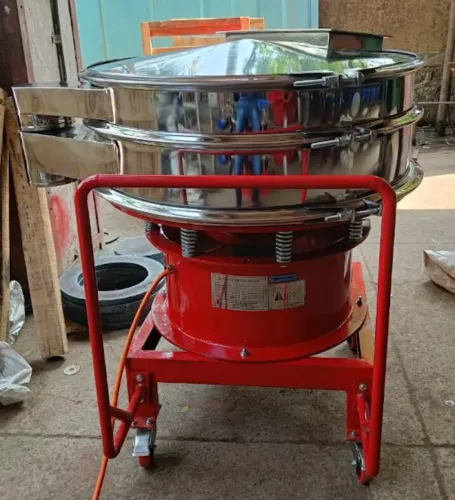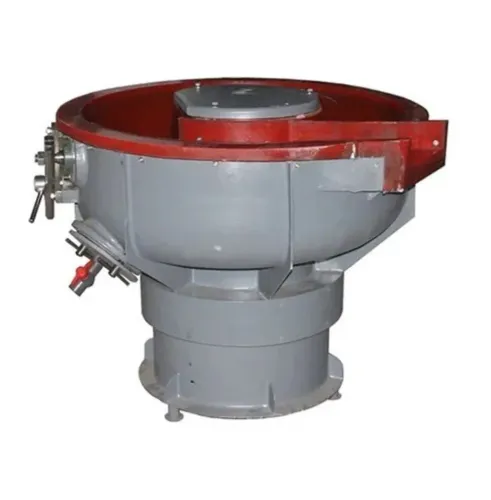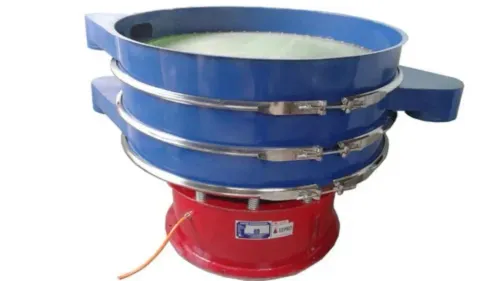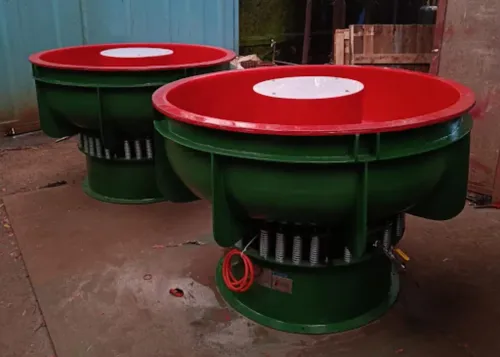
The purchase only makes sense when repeatable production demand, part geometry and the required finish support the full process cost—not just the machine price. Use the framework below to test media access, quality risk, throughput, utilities and payback before requesting a quotation or approving a trial.
Key takeaways
- Buy only when repeatable batches keep the machine occupied.
- Expect controlled edge rounding, deburring and a smoother surface.
- Match media size, compound and settings to your parts.
- Run a documented trial before approving throughput or finish claims.
Does Your Production Workload Justify the Machine?
Buy only when repeatable batches keep the equipment occupied and the finish tolerates controlled edge rounding. A ball burnishing machine for manufacturers is less attractive for tiny batches, fragile parts, inaccessible internal surfaces, or edges that must retain precise geometry.
Calculate the annual cost of each route using the same good-part output. Count:
- Operator loading, unloading and manual handling
- Inspection, sorting and rework
- Media replacement and separation
- Compound, water and electricity
- Drying and post-process cleaning
- Wastewater treatment and disposal
- Changeover time and production lost during finishing
Then compare the result with ownership costs, including purchase, installation, maintenance, depreciation or financing, and the labour needed to run and clean the machine.
| Option | Main cost risk | Reliability risk |
|---|---|---|
| Manual finishing | High labour and variable effort | Operator-to-operator variation |
| Outsourcing | Supplier charges, freight and scheduling | Delays, inconsistent batches or limited traceability |
| In-house machine | Capital, utilities and process setup | Poor results if parts and settings are not validated |
Do not use bowl capacity or a catalogue cycle time to forecast savings. Cycle time changes with alloy hardness, burr condition, geometry, media, loading ratio, compound concentration and vibration settings.
Run a trial with your actual parts and record good pieces per shift, cycle time, media and compound consumption, dimensional change, trapped media, cleanliness and rework.
The purchase is justified when the trial delivers a repeatable result and the annual saving covers ownership costs within your required payback period. If the machine only works after frequent manual correction, it has automated motion—not finishing.
What Finish Will Ball Burnishing Actually Produce?
A ball-burnished part leaves with softer edges, fewer sharp burrs and a more uniform, smoother-looking surface—not a precision-ground or mirror-polished finish. Spherical media repeatedly contacts accessible areas, smoothing high spots and plastically densifying the surface while rounding edges.
That is where the vibratory ball burnishing machine benefits matter; the same impacts can dent fragile parts or alter critical edges.
| Process | Finish produced | What it cannot reliably do |
|---|---|---|
| Ball burnishing | Smooths accessible surfaces, reduces burr sharpness and improves handling quality | Correct dimensional errors, reach sealed cavities or preserve razor-sharp edges |
| Deburring | Removes loose burrs from machining, stamping or casting | Produce a consistent decorative or mirror finish |
| Abrasive polishing | Removes fine scratches and can create a bright or mirror surface | Efficiently process complex batches without dedicated tooling or manual control |
| Shot blasting | Strips scale, rust or coatings and creates a textured, peened surface | Deliver a smooth burnished appearance |
| Barrel tumbling | Uses a rotating barrel for mass deburring, radiusing and smoothing | Match vibratory access, cycle control or media action in every geometry |
| Manual polishing | Targets selected areas and can achieve a high cosmetic finish | Maintain uniform results and labour cost across repeat batches |
| Chemical or electropolishing | Chemically removes or brightens exposed metal, including some difficult contours | Tolerate uncontrolled chemistry, poor rinsing or wastewater handling |
Treat ball burnishing as surface improvement with controlled edge rounding. Reject it for tight flatness, thin sections or inaccessible internal passages unless trials confirm burr removal, roughness, dimensional change and cosmetic limits on your own parts.
Will Your Parts, Media and Process Settings Work Together?
A bowl that holds 100 litres does not tell you how many finished parts you will ship. Test the complete combination of part, media and process, because an unsuitable combination creates dents, edge rounding, trapped balls or inconsistent colour.
1. Match ball diameter to the smallest feature you must reach. Use smaller balls for holes, grooves and recesses; use larger balls for faster contact on open surfaces. Confirm that the chosen diameter cannot lodge inside a passage or between assembled features.
2. Select media by the part material and finish target. Steel balls deliver strong impact and rapid burnishing on robust components; ceramic gives gentler contact and lower contamination risk. Record media wear, surface transfer and dimensional change during the trial.
3. Run the actual geometry, not a flat demonstration coupon. Thin sections, sharp precision edges, fragile surfaces and critical flatness require separate testing because part-to-part contact can cause dents and impingement marks.
4. Fix the loading ratio by weighing parts and media, then repeat it. Too little media reduces contact; too much restricts movement and raises separation effort. Include separators, washers or protective fixtures if parts nest together.
5. Record compound type, concentration, water volume and renewal interval. These control lubrication, cleaning, corrosion protection and slurry removal; excess compound can suppress cutting action, while too little leaves stains and poor drainage.
6. Vary vibration intensity and cycle time against measurable results: burr height, roughness, dimensions, cleanliness, trapped-media rate and colour. industrial component burnishing equipment earns a production commitment only when the trial includes loading, unloading, drying, inspection and rework.
How Do You Prove Quality and Throughput Before Buying?
A representative production trial proves suitability only when it uses your own parts, media and target finish. Test the hardest-to-finish geometry and the normal batch size, not generic samples supplied for a demonstration.
A catalogue cycle time is not an acceptance figure: alloy, hardness, burr condition, geometry, media, compound concentration and loading all change the result.
1. Record the starting and finished burr height or edge condition, surface roughness where relevant, critical dimensions, flatness and visible dents or impingement marks. Ball media smooths accessible surfaces; it cannot correct a dimensional error or produce a precision-ground finish.
2. Inspect every cavity, hole and recess for trapped media. Count contaminated parts, then record colour, residue and cleanliness after washing or drying against written limits.
3. Time the complete batch: loading, vibration, unloading, media separation, washing, drying, inspection and changeover. Record media and compound consumption, water use, rework, rejected parts and stoppages.
4. Repeat the trial on at least three batches. Accept the process only when each batch meets the finish and damage limits at the agreed cycle time.
Calculate usable output as accepted parts divided by total elapsed production time, including setup and recovery: accepted parts ÷ (run time + loading + unloading + separation + washing/drying + inspection + changeover + downtime). Do not divide bowl capacity by catalogue cycle time.
Ask a supplier of a vibratory ball burnishing machine for industrial plants in Navi Mumbai to place these results in a signed acceptance report. Compare that accepted parts-per-hour figure with your required output, not the bowl’s nominal volume.
What Must You Specify to a Supplier in Navi Mumbai?
Put your own production parts into the quotation request, not generic samples. Ask a vibratory ball burnishing machine manufacturer in Navi Mumbai to state usable batch load, media type and diameter, compound dosage, water rate, cycle controls, working capacity and the allowed dimensional change. Specify limits for edge rounding, dents, impingement marks and trapped media.
- Record the connected electrical load, phase and voltage; required water pressure and quality; drain size; effluent collection point; floor loading; machine footprint; lifting access; noise level; enclosure needs; and service-response time.
- Price the complete cell, including media, compound dosing, part-media separation, drying, guarding, ventilation and wastewater handling. Adding these later can change the installed cost substantially.
- Confirm where spent water containing metal fines, residue and process chemicals will be collected, treated and disposed of. Do not assume a floor drain is acceptable; define the route with your environmental consultant and local authority.
| Purchase detail | Put in writing | Acceptance evidence |
|---|---|---|
| Technical | Part number, batch load, media, compound, cycle and controls | Repeatable run on your parts |
| Installation | Utilities, access, floor load, drainage and noise limit | Site inspection and utility check |
| Environment | Effluent route, containment and housekeeping method | Documented collection and disposal |
| Quality | Burr height, roughness, dimensions, cleanliness and cosmetic limits | Signed test report |
Use Separation Engineers (India) as one quotation benchmark, but compare documented results rather than bowl capacity or catalogue cycle time. Reject a trial that uses substitute parts: it cannot prove throughput, media consumption or production suitability.
Related product
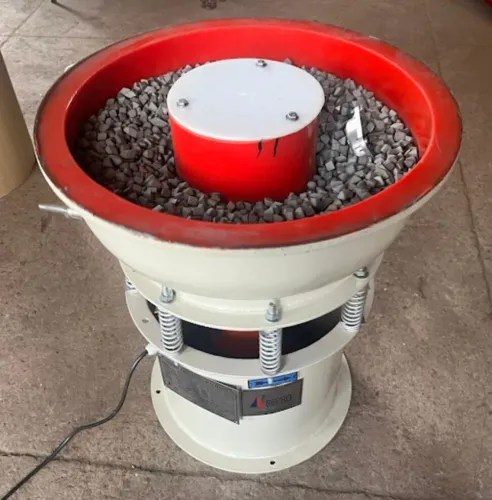
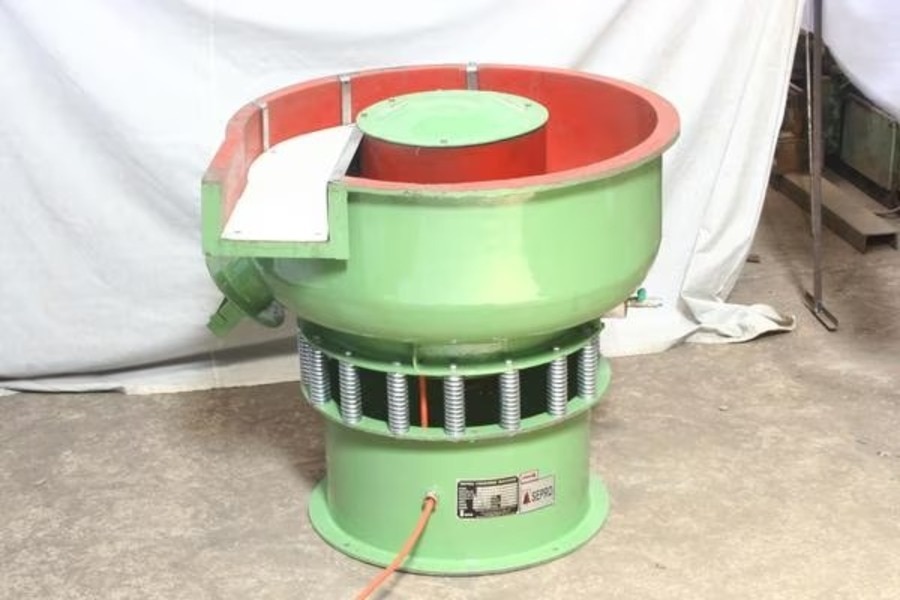
 | Vibratory Ball Burnishing Machine Vibratory Ball Burnishing Machine SEPRO VFM is a specially designed rubber lined bowl Having intentional three component mechanical vibrations viz. Vertical, Horizontal and Gyratory. View product → |
Frequently asked questions
When does a vibratory ball burnishing machine justify its cost?
It makes sense when repeatable production batches keep the equipment occupied and manual finishing consumes significant labour. Small batches, fragile parts and parts with inaccessible internal surfaces weaken the business case.
What finish does ball burnishing produce?
Ball burnishing smooths and brightens compatible metal surfaces while removing light burrs and rounding exposed edges. It cannot preserve sharp edge geometry or reach every internal feature.
How do you choose compatible media and process settings?
Match media material and size to the part alloy, geometry and required finish. Confirm the bowl load, liquid or compound, cycle time and separation method through a controlled trial.
How can you prove throughput and quality before buying?
Send representative parts for a documented trial, then record batch weight, cycle time, media ratio, reject rate, dimensional change, surface finish and unloading time.
What should you specify to a supplier in Navi Mumbai?
Provide part drawings, material, dimensions, weight, batch size, target finish, allowable edge rounding, daily hours, utilities, media requirements and inspection criteria.
Keywords