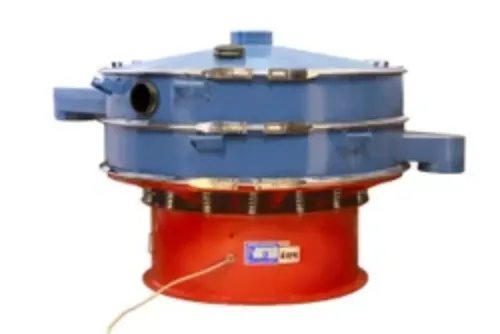


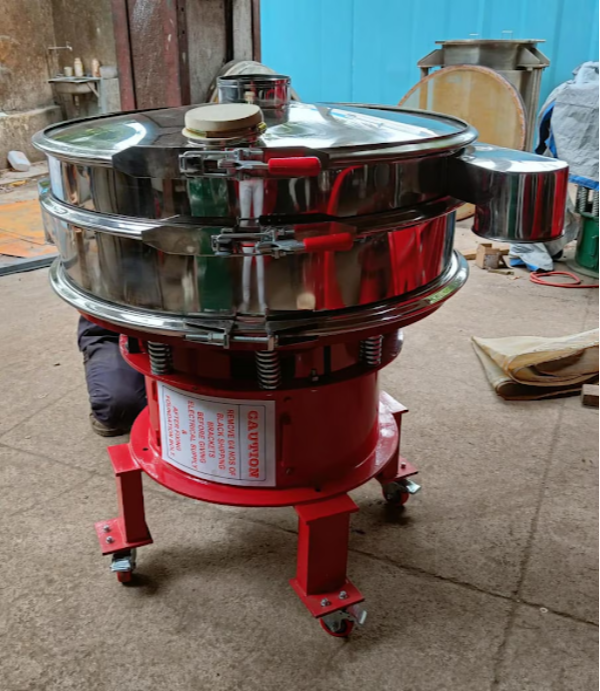
Coating processes often depend on maintaining a consistent liquid feed. Agglomerates, dried coating fragments, foreign particles, and other unwanted solids can interfere with downstream application equipment and affect process stability. A Coating Solution Screening Machine can provide an intermediate screening stage to remove particles larger than the selected screen opening before the coating solution reaches the next production step.
The correct system depends on the coating formulation, required flow, and desired filtration level.
Identify the Contamination Risk
Before selecting equipment, manufacturers should determine what unwanted material is actually present in the coating solution.
Potential sources can include dried material from vessel surfaces, agglomerated ingredients, packaging contamination, process debris, and particles introduced during mixing or transfer.
Understanding the likely contaminant size helps establish an appropriate screening requirement.
Consider Viscosity
Liquid screening behaviour changes significantly with viscosity.
A relatively free-flowing coating can pass through a screen differently from a thick formulation. Temperature may also influence viscosity and therefore screening performance.
When discussing equipment capacity, manufacturers should provide information based on the actual coating rather than water flow alone.
Select the Screen Opening Carefully
The screen should remove unwanted particles without unnecessarily restricting acceptable material.
An aperture that is too coarse may allow problematic solids to pass. An excessively fine mesh may restrict flow or require more frequent cleaning.
The correct balance depends on downstream equipment and product requirements.
Manufacturers should identify the largest particle that can safely remain in the coating and use that information as part of screen selection.
Check Material Compatibility
Product-contact construction should be appropriate for the coating formulation and plant requirements.
Manufacturers should share relevant process information with the equipment provider, including the nature of the liquid, operating temperature, cleaning practices, and any known compatibility concerns.
This is particularly relevant in chemical and pharmaceutical manufacturing clusters around Navi Mumbai and across Maharashtra, where coating formulations and plant standards can vary substantially.
Think About Cleaning Between Batches
A screening machine may handle multiple batches or formulations. Cleaning access therefore becomes an important selection factor.
Production teams should examine how easily product-contact areas can be inspected and cleaned, especially when colour changes, formulation changes, or contamination controls are important.
The cleaning method should be considered during equipment selection rather than after installation.
Review Installation Details
The machine needs to fit the transfer process.
Useful information includes inlet and outlet arrangement, available headroom, feed method, required discharge height, surrounding equipment, and operator access.
A screening system that performs effectively during a stand-alone trial may still create production difficulties if it cannot be integrated conveniently into the plant layout.
Use Actual Coating Samples Where Practical
Representative trials can provide valuable information about throughput, screen behaviour, cleaning needs, and the quality of screened liquid.
Separation Engineers support screening applications for different process materials. Companies evaluating a Coating Solution Screening Machine in Navi Mumbai or elsewhere in Maharashtra can improve the selection process by sharing coating viscosity, required flow, contaminant characteristics, preferred screen opening, and installation constraints.
A well-planned screening stage should support the coating process without becoming a bottleneck. Matching the equipment to the actual formulation and production arrangement is therefore more valuable than selecting a machine from capacity figures alone.