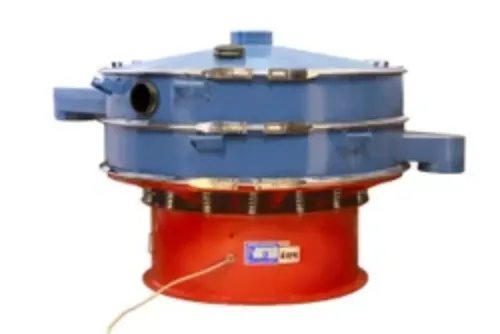


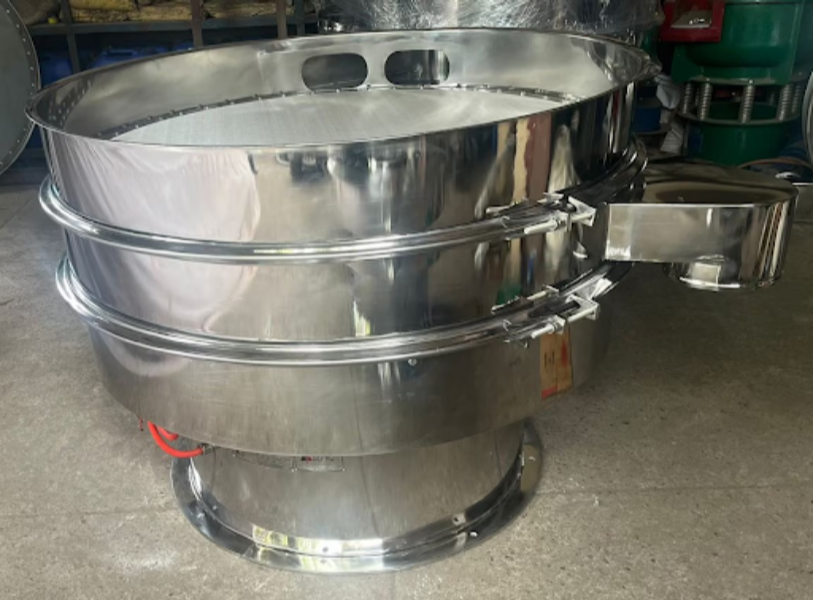
A screening machine can appear straightforward until production teams begin comparing screen sizes, deck arrangements, mesh specifications, capacities, product-contact materials, and discharge configurations. Choosing incorrectly can lead to poor separation, frequent screen cleaning, reduced throughput, or unnecessary equipment capacity.
A Gyro Screen uses gyratory vibratory motion to separate material according to particle size. It is widely applicable to powders, granules, and certain liquid-solid separation duties, making correct configuration essential.
Start With the Material Rather Than Machine Size
A common purchasing mistake is beginning with the required machine diameter or motor specification before examining the product.
The material should come first.
Process engineers should document particle distribution, bulk density, moisture behaviour, flow characteristics, tendency to agglomerate, temperature, and required throughput.
These details determine how easily material can travel across the screening surface and pass through the selected mesh.
Define What the Screen Must Remove
Screening objectives can differ considerably.
One manufacturer may want to remove a small amount of oversize contamination from finished powder. Another may need to classify material into several fractions. A third may need to recover useful solids from a process stream.
Each objective can require a different machine arrangement.
Before requesting equipment, clearly define the acceptable product size and unwanted fraction. This makes screen selection far more accurate.
Consider Single Deck and Multiple Deck Requirements
A single screening deck is suitable when the process requires one primary separation point. Multiple decks can be considered when several particle-size fractions need to be separated during the same operation.
More decks do not automatically mean better processing. Each additional separation stage should have a clear production purpose.
Capacity Needs Context
A stated throughput such as kilograms per hour is useful, but it is not enough by itself.
Two products processed at the same hourly quantity can behave very differently. A free-flowing granular product may screen easily, while a fine cohesive powder may require considerably more attention to screen area and operating conditions.
Capacity estimates should therefore be based on product trials, representative process data, or relevant application experience whenever possible.
Evaluate Cleaning and Product Changeovers
Manufacturers handling several products need to consider how frequently the screening machine will be cleaned.
Easy access to product-contact areas can reduce changeover time. Screen replacement should also be practical because different products may require different mesh specifications.
This becomes particularly important for food, chemical, pharmaceutical-related, and specialty manufacturing environments where material control is closely monitored.
Assess the Complete Installation
Industrial buyers in Navi Mumbai and across Maharashtra should also consider feed arrangement, discharge height, available floor space, upstream equipment, downstream collection, electrical requirements, and accessibility.
A technically suitable screen can still create installation difficulties when these factors are ignored.
Separation Engineers works with screening and separation applications across industrial sectors. Buyers evaluating equipment can use actual product characteristics and processing requirements to determine an appropriate configuration rather than relying on generic capacity assumptions.
The right gyro screening system should provide the required separation while fitting naturally into the production line. A careful review of material behaviour, mesh requirement, throughput, cleaning, installation, and discharge arrangement creates a much stronger basis for equipment selection.