

Industrial water systems often carry suspended solids that must be removed before water is recirculated, discharged, transferred, or sent to another treatment stage. When solids are not effectively separated, they can accumulate in pipelines, tanks, pumps, nozzles, and downstream equipment.
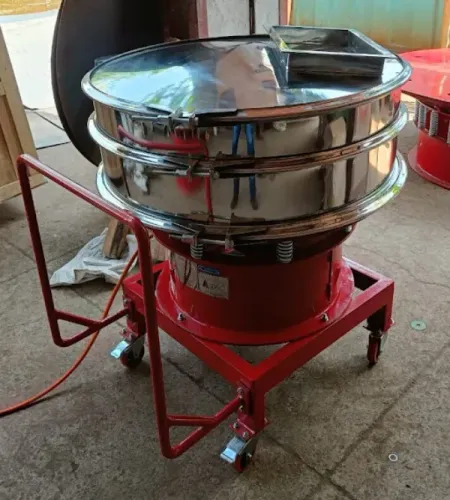
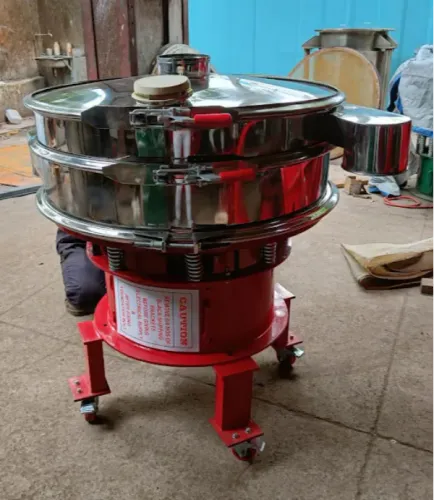
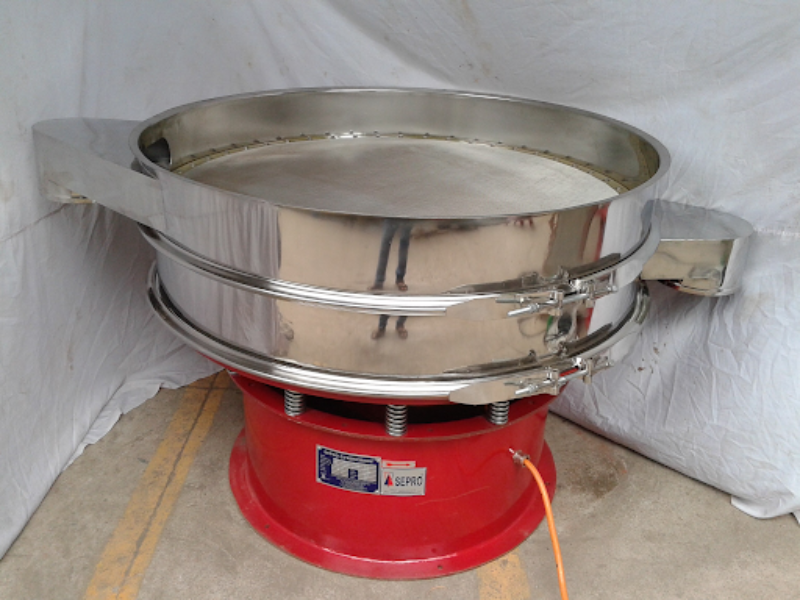
A Back Water Filtration Screening Machine is used to separate unwanted suspended material from process water streams. Screening provides a physical separation stage that can reduce the solids load entering subsequent equipment and help maintain more stable process conditions.
Why Screening Matters in Water Handling
Industrial water may contain fibres, particles, process residues, fragments, and other suspended material. The nature and quantity of these solids depend on the manufacturing operation.
Allowing them to remain in circulation can contribute to several operational issues, including:
- Blocked nozzles and restricted pipelines
- Increased cleaning requirements
- Solids accumulation in tanks
- Additional load on downstream filtration
- Irregular water circulation
- Higher maintenance frequency
Screening removes particles according to the selected screen opening and process configuration.
Screen Selection Depends on the Contaminant
The effectiveness of screening depends heavily on understanding what needs to be removed.
A process containing relatively large suspended solids requires a different screening arrangement from one containing fine particles. Engineers therefore need to examine particle size distribution rather than specifying a machine based only on flow rate.
The characteristics of the solids also matter. Sticky, fibrous, abrasive, lightweight, and irregular particles can behave differently on a screening surface.
Flow Conditions Should Not Be Ignored
A screening machine needs to accommodate normal process flow without creating unnecessary restrictions. At the same time, sizing equipment only according to average flow may be inadequate when production creates significant peak loads.
Useful operating information includes normal flow, peak flow, solids concentration, temperature, particle characteristics, and the desired separation level.
Providing realistic process data helps establish whether the proposed screening area and configuration are appropriate.
Screening Can Protect Downstream Processes
One important function of screening is reducing the burden placed on subsequent treatment equipment.
Removing larger suspended solids before finer filtration can help prevent premature loading of filters. It may also reduce the amount of solid material entering pumps, treatment tanks, and other process equipment.
This makes screening an important part of a staged water-management strategy rather than an isolated operation.
Maintenance Accessibility Influences Long-Term Performance
Screening equipment works in direct contact with contaminated process streams. Screens consequently require inspection and cleaning according to operating conditions.
A system that is difficult to access can increase maintenance time. When evaluating equipment, plant teams should consider how easily screens can be inspected, removed, cleaned, and replaced.
For industrial facilities in Navi Mumbai and Maharashtra, these practical considerations are particularly relevant where continuous production makes avoidable downtime costly.
Separation Engineers supply screening and separation equipment for industrial applications. When evaluating back-water screening, the company can consider the actual process stream, solids characteristics, required screening level, and plant operating conditions.
Effective process-water screening begins with understanding the contamination problem. Once particle characteristics, flow requirements, and downstream needs are clear, screening can become a dependable first-stage separation method that supports cleaner circulation and more manageable water-treatment operations.