

Chilli powder production looks straightforward until variations begin appearing in the finished product. Fine powder may contain coarse particles, agglomerated material, fibre fragments, seeds, foreign matter, or particles that do not match the required grade. These inconsistencies can affect appearance, texture, downstream packing, and overall product uniformity.
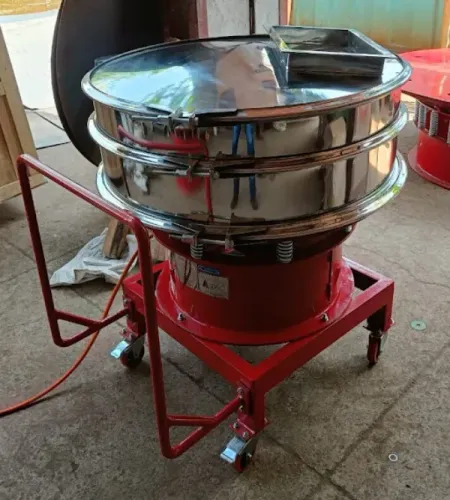
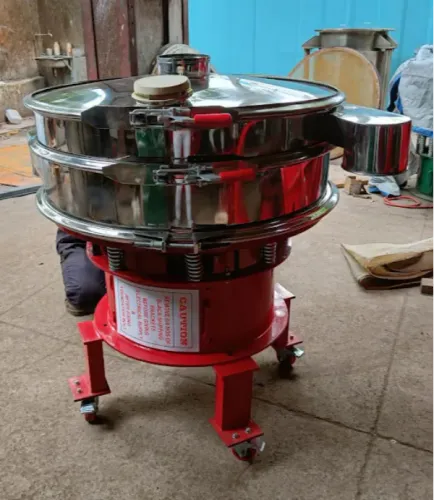
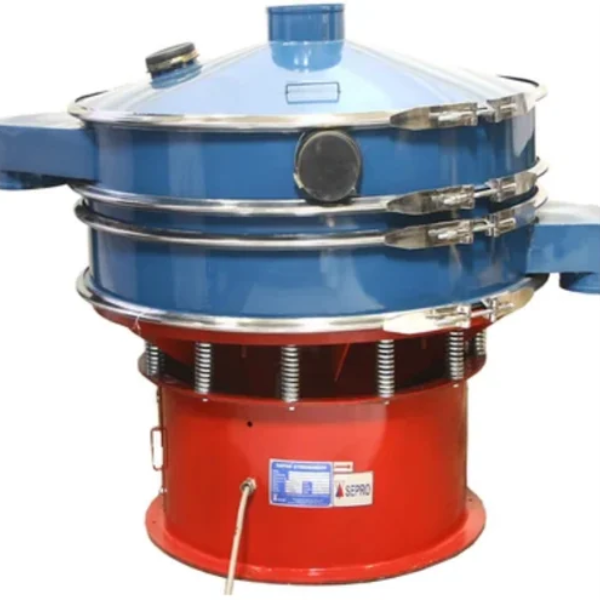
A Chilly Powder Screening Machine is used to separate material according to the required particle size. For spice manufacturers and processing units, screening is an important stage between grinding and final packing because grinding alone does not necessarily produce a completely uniform powder.
Food processing businesses in Navi Mumbai and other industrial areas of Maharashtra often handle different chilli varieties, batch sizes, and production requirements. A suitable screening process helps create greater consistency despite these variations.
What a Chilly Powder Screening Machine Actually Does
After dried chillies are ground, the powder contains particles of different sizes. Screening passes the material through a selected mesh so that appropriately sized powder moves through while oversized material remains separated.
Depending on the process, the retained material may be inspected, reprocessed, or handled separately.
This provides several practical benefits:
- More uniform particle size
- Separation of oversized particles
- Better consistency between batches
- Reduced presence of unwanted coarse material
- Smoother downstream packing
- Greater control over finished-product specifications
The objective is not simply to make chilli powder finer. The objective is to achieve the particle-size range required for the intended product.
Mesh Selection Has a Major Impact
Selecting a very fine mesh does not automatically improve screening.
If the opening is unnecessarily small, throughput may decline and screen loading may increase. If the mesh is too coarse, particles outside the desired specification may pass into the finished material.
The appropriate mesh depends on factors including the required powder grade, grinding output, moisture condition, particle behaviour, production capacity, and customer specification.
Processors should therefore define the desired result before choosing screen parameters.
Product Flow Needs Attention
Chilli powder can behave differently depending on moisture, oil content, grinding temperature, and storage conditions. Powder that flows freely under one production condition may form lumps under another.
Consistent feeding helps the screening surface work effectively. Excessive loading can reduce separation efficiency, while irregular feeding may produce inconsistent throughput.
Production teams should monitor the complete material flow rather than treating the screening machine as an isolated piece of equipment.
Hygiene Is Important in Spice Processing
Any equipment handling food ingredients needs practical cleaning access. Residual powder left inside difficult areas can complicate changeovers and housekeeping.
A screening system intended for chilli powder should therefore be evaluated for:
- Contact-part accessibility
- Ease of screen removal
- Cleaning requirements
- Product collection arrangement
- Dust management
- Material compatibility
These considerations become particularly important when the same production area handles multiple spice products.
When Chilly Powder Screening Machine Performance Needs Review
Frequent oversized particles in finished powder, declining throughput, excessive screen loading, repeated mesh damage, and inconsistent product grades can indicate that the existing screening stage needs attention.
The cause may not always be the machine itself. Feed rate, mesh condition, moisture, upstream grinding, and operating practices can all influence results.
For spice manufacturers in Navi Mumbai, Maharashtra, understanding these variables makes equipment discussions more productive. Instead of selecting screening equipment only by machine size, processors can evaluate the actual powder characteristics, required output, hygiene needs, and desired particle specification.
A properly planned screening stage supports the larger goal of consistent chilli powder production by controlling what proceeds to packing and what requires further processing.