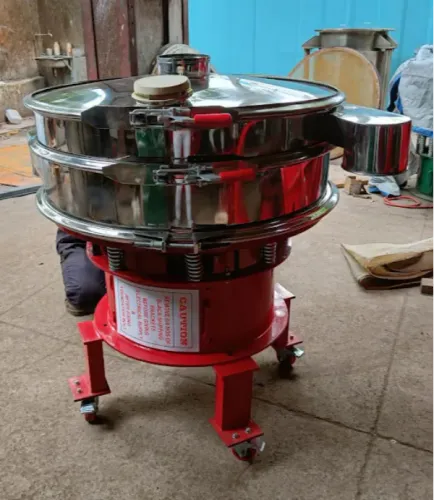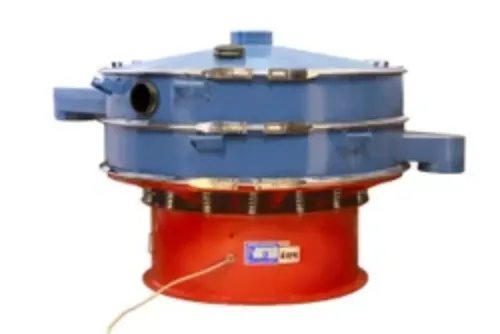


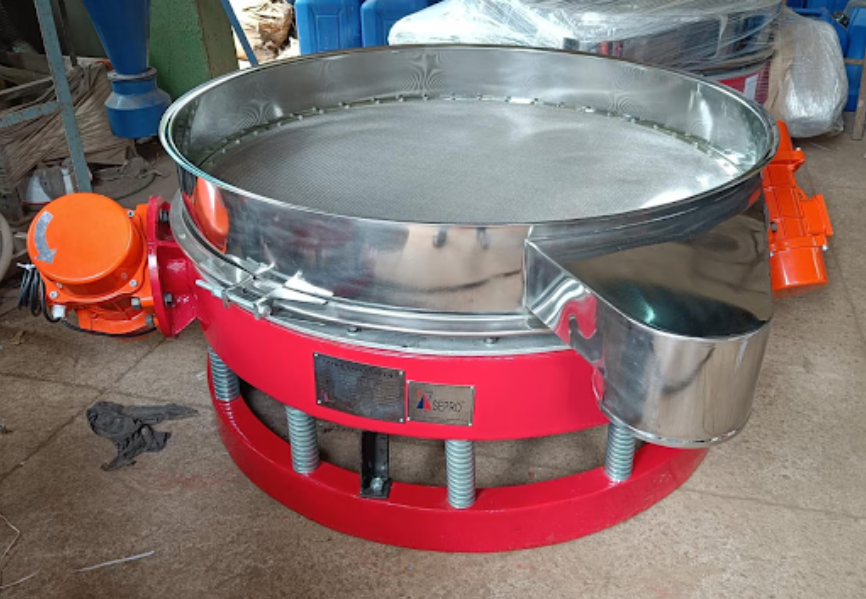
Detergent powder production involves multiple ingredients and processing stages, and the finished material may contain lumps, agglomerates, or particles outside the desired size range. These inconsistencies can affect flow, blending uniformity, filling operations, and the visual consistency of packaged products.
A Detergent Powder Screening Machine can provide a defined separation stage before packaging or another downstream operation. Selecting the right system requires more than matching equipment to an hourly production figure.
Identify Where Screening Is Needed
Screening can be introduced at different points depending on the production process.
Some manufacturers may need screening after blending to remove agglomerates. Others may use it before packing so that unwanted oversized material does not enter the final product stream.
The best location is where screening provides a clear process benefit without creating unnecessary material handling.
Define the Desired Particle Range
Screen specification should reflect the product quality requirement.
If the mesh is too open, undesirable oversize may pass through. If it is unnecessarily fine, throughput may decrease and screen loading can increase.
Quality and production teams should agree on the acceptable particle range before equipment is selected.
Account for Powder Behaviour
Detergent formulations can vary considerably.
Different ingredients, particle distributions, bulk densities, and moisture conditions can change how powder behaves during screening. Some formulations may flow readily, while others can form agglomerates or create challenging screen-loading conditions.
Providing representative material data helps equipment providers recommend a more appropriate configuration.
Consider Dust Management
Fine powder handling can generate airborne dust, particularly around feeding and discharge points.
The screening installation should therefore be considered together with the plant's material-transfer and dust-management practices.
Enclosed transfer arrangements and properly planned connections can help create a cleaner processing environment according to site requirements.
Evaluate Cleaning Access
Product changeovers may require equipment cleaning, particularly when a facility manufactures different detergent grades or formulations.
Buyers should inspect how easily product-contact areas can be reached and how screens can be removed for cleaning and inspection.
Equipment that is straightforward to maintain can reduce avoidable production interruptions.
Confirm Installation Readiness
Before procurement, plant teams should verify:
- Available floor area
- Machine inlet and outlet heights
- Feed system arrangement
- Collection system
- Electrical requirements
- Maintenance access
- Required production capacity
- Screen specification
This information can prevent a technically suitable machine from becoming difficult to integrate into the production line.
Detergent and chemical manufacturing companies in Navi Mumbai form part of a wider Maharashtra industrial ecosystem where reliable powder handling is important for maintaining production continuity.
Separation Engineers supply industrial screening equipment for different material-processing applications. An application-based discussion can consider detergent characteristics, particle-size requirements, throughput, screen arrangement, and installation needs.
The strongest purchasing decision comes from treating screening as part of the complete production process. When product behaviour, quality requirements, feeding, cleaning, and installation are evaluated together, manufacturers can select equipment that supports dependable everyday operation rather than simply meeting a catalogue specification.