
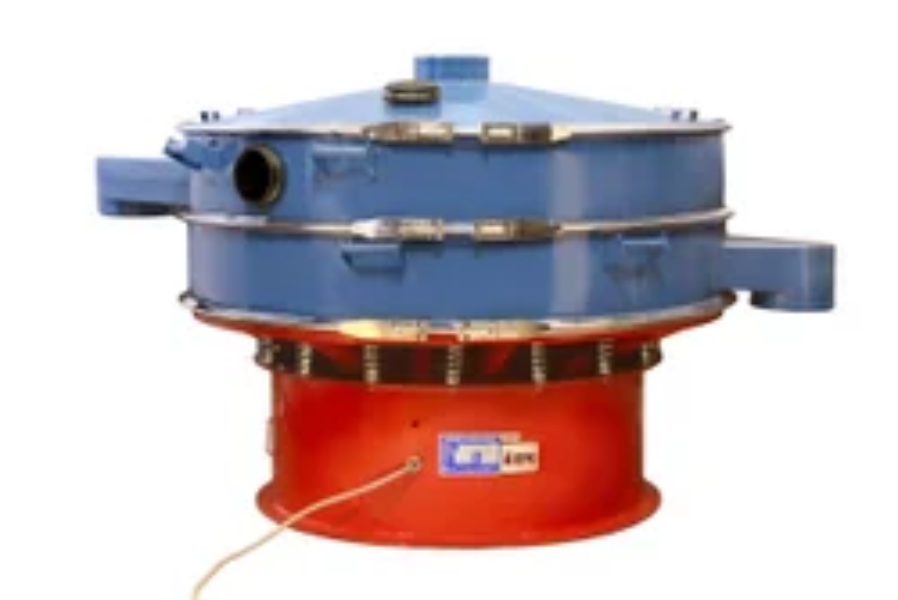
Manufacturing processes frequently require more than simple removal of unwanted material. A product may need to be separated into different particle-size fractions so that each fraction can be processed, reused, packaged, or handled independently. Gyro Screens provide a practical screening method for applications where controlled particle classification is important.
These screening systems use vibratory movement to distribute material over a screening surface. Depending on the configuration, particles can be separated according to selected mesh sizes, enabling manufacturers to obtain more consistent output from powders, granules, and other free-flowing materials.
How Particle Classification Works
When material enters a screening unit, vibration encourages it to spread across the mesh. Particles that meet the selected size specification pass through the screen, while larger material remains above it.
With multiple decks, different mesh sizes can be arranged within the same screening system. This makes it possible to divide one feed material into several fractions.
For example, a process may need to separate:
- Fine particles suitable for direct use
- Medium particles requiring separate processing
- Oversized material that needs reprocessing
- Unwanted foreign matter that should be rejected
The exact arrangement depends on the production objective.
Why Multi Deck Screening Can Be Useful
Installing separate machines for every particle range may require more floor space and additional material transfer. A multi-deck arrangement can perform several classification stages within one screening process when the material and capacity requirements permit it.
This can be useful in chemical processing, food manufacturing, pharmaceutical production, mineral handling, and other industries dealing with granular or powdered materials.
The benefit is not simply compact equipment. Controlled classification can also help manufacturers maintain predictable material characteristics between batches.
Material Behaviour Influences Performance
Two products with similar particle sizes may not behave the same way during screening.
Fine dry powder may flow easily under one set of conditions but become difficult to screen when moisture increases. Irregular particles can behave differently from spherical granules. Materials with static tendencies may also require additional consideration.
Manufacturers should evaluate characteristics such as:
- Bulk density
- Particle shape
- Moisture
- Flowability
- Required throughput
- Desired cut size
- Number of classifications
Testing representative material can be especially useful when screening behaviour is difficult to predict from particle size alone.
Screen Cleaning Deserves Attention
Screening efficiency can decline when apertures become blocked. This phenomenon is commonly associated with particles becoming trapped within the openings or fine material accumulating on the mesh.
Regular inspection and suitable cleaning practices help maintain open screening area. The appropriate approach depends on the product, mesh size, hygiene requirements, and machine configuration.
Food and pharmaceutical environments may place greater emphasis on easy product-contact cleaning, while industrial mineral applications may focus more heavily on wear and durability.
Local Manufacturing Requirements Can Differ
Production facilities across Navi Mumbai and Maharashtra range from pharmaceutical and chemical plants to engineering and food-processing operations. Their screening priorities can vary significantly.
A plant handling fine specialty chemicals may prioritize precise classification and enclosed handling. Another processing coarse material may focus on throughput and robust construction.
This is why Gyro Screens should be evaluated as part of a process rather than as stand-alone equipment. Separation Engineers support screening applications where particle characteristics, required fractions, production capacity, and equipment integration need to be considered together. A clearly defined screening objective makes it easier to select a configuration that supports consistent production.


