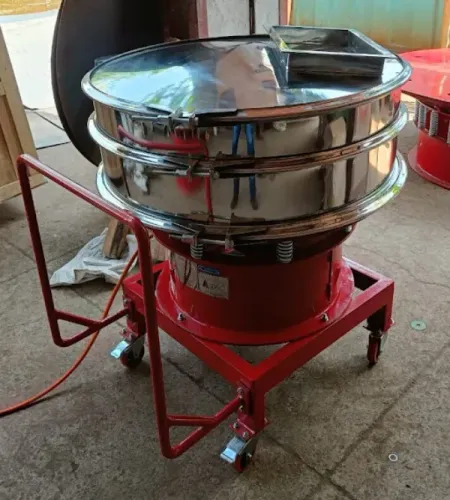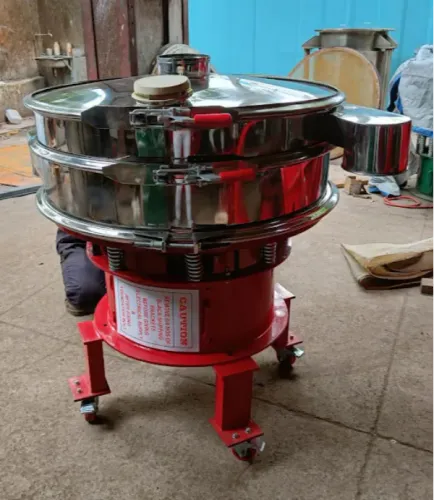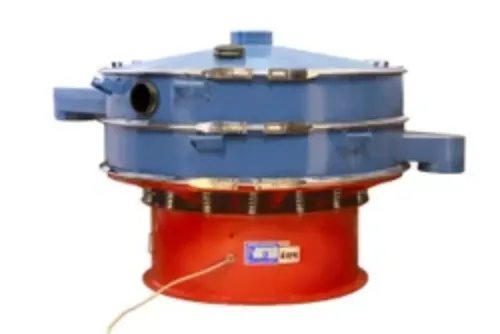


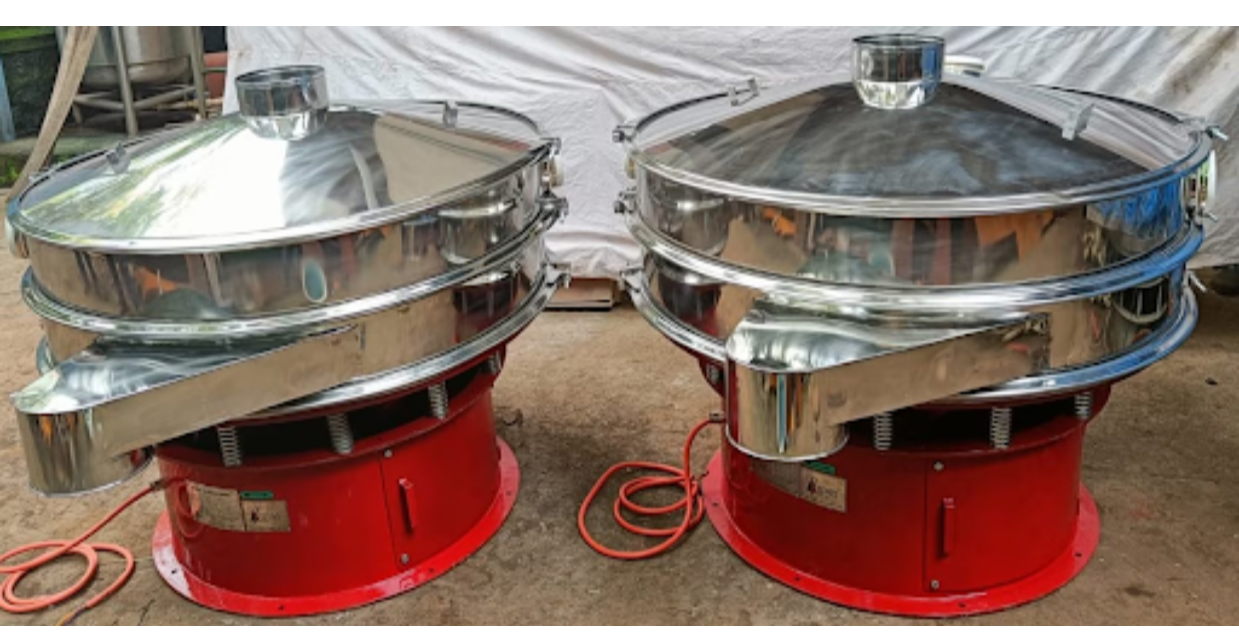
Cocoa powder can develop agglomerates and unwanted oversize particles during processing, handling, storage, and transfer. For food manufacturers, screening provides an important physical control step before powder enters blending, packing, or another production operation.
Selecting a Cocoa Powder Screening Machine requires careful consideration of product behaviour, hygiene, capacity, cleaning, and the particle specification expected by the process.
Begin With the Required Product Standard
Buyers should first define why screening is needed.
Is the machine intended to remove occasional lumps from finished cocoa powder? Does the process require a defined particle-size fraction? Is screening needed before blending with other ingredients?
A clear objective helps determine the appropriate screen specification and machine arrangement.
Consider the Behaviour of Cocoa Powder
Fine food powders can behave differently from free-flowing granular materials.
Cocoa powder characteristics can influence how material spreads across a screen and passes through its openings. Production conditions, storage, and moisture exposure may also contribute to agglomeration.
For this reason, equipment capacity should not be evaluated using machine size alone.
Representative product information provides a better basis for selection.
Prioritize Hygienic Handling
Food processing equipment should fit the facility's hygiene and cleaning practices.
Buyers should evaluate product-contact surfaces, access for cleaning, screen removal, joints, discharge areas, and locations where residual powder could potentially accumulate.
If the plant handles different products on the same line, changeover procedures become even more important.
Match Capacity With Production Reality
The machine should accommodate required production output without making screening ineffective.
Useful information includes:
- Normal hourly throughput
- Peak production rate
- Batch size
- Required mesh
- Feeding arrangement
- Number of operating hours
- Frequency of product changeovers
A procurement decision based on these factors is more useful than selecting equipment simply because it has a high quoted capacity.
Check Installation Requirements Early
Before placing an order, measure the actual installation area.
Consider inlet height, outlet position, collection arrangement, surrounding machinery, access for operators, and maintenance space.
Food manufacturing facilities around Navi Mumbai and elsewhere in Maharashtra may have established production lines where available space is limited. Identifying dimensional constraints early can reduce installation complications.
Ask About Screen Access
Screens are working components and require inspection.
Quality and maintenance teams should understand how the screen is accessed, removed, cleaned, checked, and replaced. Easy inspection can help plants maintain their screening procedures without excessive downtime.
Evaluate the Supplier Through Application Knowledge
A supplier should ask meaningful questions about the product rather than recommend equipment solely according to a generic model chart.
Separation Engineers works with industrial screening and separation applications, including equipment for powder processing. For a cocoa powder application, machine selection can be approached through product characteristics, required particle separation, throughput, cleaning expectations, and installation conditions.
A suitable cocoa screening system should integrate with the production process while providing consistent particle control. Buyers who define the product specification, hygiene requirements, actual throughput, and installation constraints before procurement are better positioned to select equipment that works effectively under day-to-day production conditions.